Do Plug-and-Play PCMs Work? What to Know Before You Buy (2026)
Yes, plug-and-play PCMs work. When a replacement PCM is pre-programmed to your exact VIN by a reputable remanufacturer, it drops in and runs the engine with no tuning and no flashing. The main caveat is anti-theft. On a vehicle with an active immobilizer, a factory anti-theft system that is common on newer vehicles, you may still need a quick security or key relearn after the swap. That is sometimes a short on-car procedure, otherwise a locksmith or local shop, not necessarily a dealer.
Key Takeaways
- A plug-and-play PCM is pre-programmed to your VIN before it ships, so the correct factory software and calibration are already loaded for your exact year, make, model, and engine.
- A VIN-matched PCM skips the tuning and flashing. On a vehicle with no active immobilizer it runs the moment you install it; on a newer vehicle it runs once the security re-syncs.
- Anti-theft (immobilizer) systems are the main reason a swap needs one more step. If the security data does not match, the engine may crank, start for a second, then stall.
- That extra step is a relearn, not a reprogram. A key or security relearn is often a short on-car procedure, though some platforms need a scan tool at a locksmith or shop.
- A used or salvage PCM is the risky path. It carries another vehicle’s VIN and security data and usually has to be wiped and reprogrammed before it will work.
What “Plug-and-Play” Really Means for a Replacement PCM
Plug-and-play means the replacement PCM arrives already programmed to your vehicle, ready to install and drive. A reputable remanufacturer loads your VIN, the correct factory software, and the calibration for your engine and transmission before the module ships. You do the physical swap. The computer already knows your car.
That covers the hard part for most drivers. A powertrain control module runs both the engine and the transmission (what a PCM controls), so its software has to match your exact platform or the vehicle runs poorly or not at all. When that programming is done before shipping, “plug-and-play” is accurate.
What it does not always cover is your car’s anti-theft handshake. That security check is separate from the engine calibration, and it is the main step that can still need attention on some vehicles.
When a Plug-and-Play PCM Works (and When You Need Extra Steps)
A VIN-programmed PCM from a reputable source runs on install when no security re-sync is needed. When your vehicle has an active immobilizer, it needs one more step to match the anti-theft data. Here is how that breaks down by situation.
| Your situation | Plug-and-play? | What you still do |
|---|---|---|
| Vehicle with no active immobilizer (many older domestics), VIN-programmed module | Yes | Install it, reconnect the battery, start the engine |
| Vehicle with an active immobilizer (common on newer vehicles), VIN-programmed module | Usually, after one step | A key or security relearn: a short on-car procedure, a locksmith, or a shop |
| Used or salvage PCM from another vehicle | No | It usually has to be wiped and reprogrammed to your car first |
| Mercedes (VIN-locked), cloned route | Yes, after you send in your original | You mail in your original module; your VIN, keys, and security are copied across |
| Hellcat, most 6.4L 392 HEMI, or other send-in repair unit | No, it is a repair | You ship your original module in; it is rebuilt and reflashed to your VIN |
When a plug-and-play PCM just works
On a vehicle with no active immobilizer, a VIN-programmed PCM from a reputable remanufacturer starts and runs as soon as you install it. The software, the calibration, and your VIN are already loaded, so there is nothing to flash. Many older domestic cars and trucks fall in this group. On a newer vehicle with an immobilizer, that same VIN-programmed module runs once the security re-syncs, which is the extra step below.
When you need one more step
The most common reason a swap is not truly plug-and-play is the anti-theft system. If the immobilizer data does not match, the engine often cranks and may start for a second, then stalls until the security system is satisfied. The fix is a security or key relearn that syncs the module to your car (Ford PATS programming), not a full reprogram. On some models that is a short key-cycle procedure; on others it needs a scan tool at a locksmith or shop, which can carry a fee.
Two other situations can call for a quick step. Some vehicles need a scan-tool relearn after the swap, such as a crankshaft or misfire-monitor relearn so the computer reads the engine correctly (Snap-on misfire monitor relearn). And a module with the wrong part number for your trim can run poorly or lose features, which is why the exact match matters.
Why a Replacement PCM Needs Programming at All
Most replacement PCMs need three things before your engine runs right: the correct factory software and calibration, your vehicle’s VIN, and matching anti-theft data. Miss any one and the car runs poorly, throws codes, or will not start.
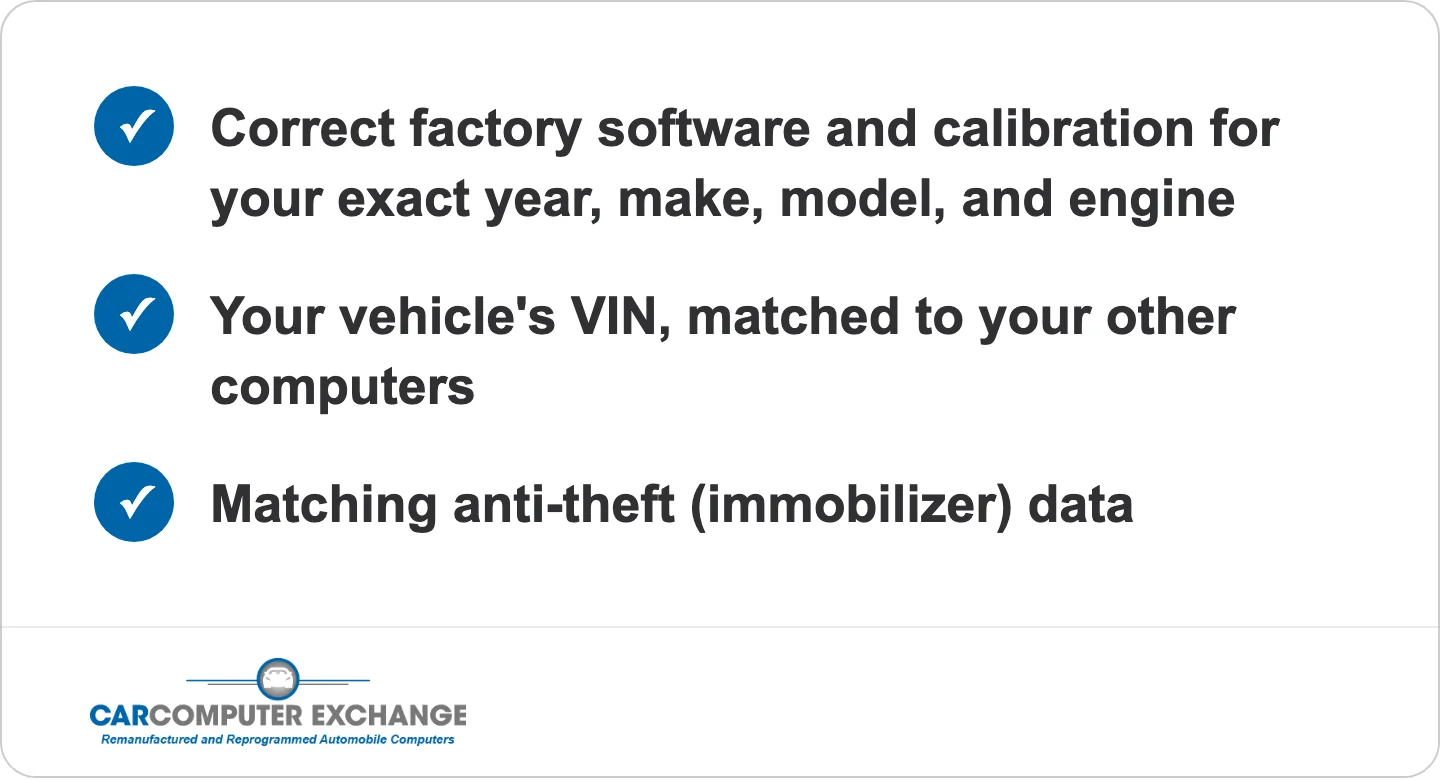
What every replacement PCM needs loaded before your engine runs right. Source: Car Computer Exchange.
Software and calibration have to match your year, make, model, engine, transmission, and emissions setup. A brand-new blank module from the manufacturer arrives with no software and has to be flashed. A good remanufactured unit comes pre-flashed with the correct calibration already loaded.
The VIN is stored in the module and has to match the VIN in your other computers. If they disagree, the security system can block the engine from starting.
Anti-theft data is the step that often gets overlooked. Systems like Ford PATS and GM security match the module to your keys and your car. When the data does not match, the engine often cranks and may start briefly, then stalls.
That is also why a used or salvage PCM is a gamble: it still carries the donor car’s VIN and security data and usually has to be wiped and reprogrammed first. On some VIN-locked modules, such as Mercedes, the cleaner path is cloning from your original computer so your keys and security keep working.
One nuance: some older vehicles never used factory VIN programming or an immobilizer, so any correctly matched module simply runs. Deciding whether to replace or repair in the first place is a separate question, and our guide on when to replace a PCM covers that.
How to Make Sure You Get the Right PCM
Getting the right PCM starts with your vehicle’s exact year, make, model, and engine size, plus the OEM part number printed on the module itself. Many PCMs look identical on the outside but are calibrated differently inside, so a close match is not a safe match.
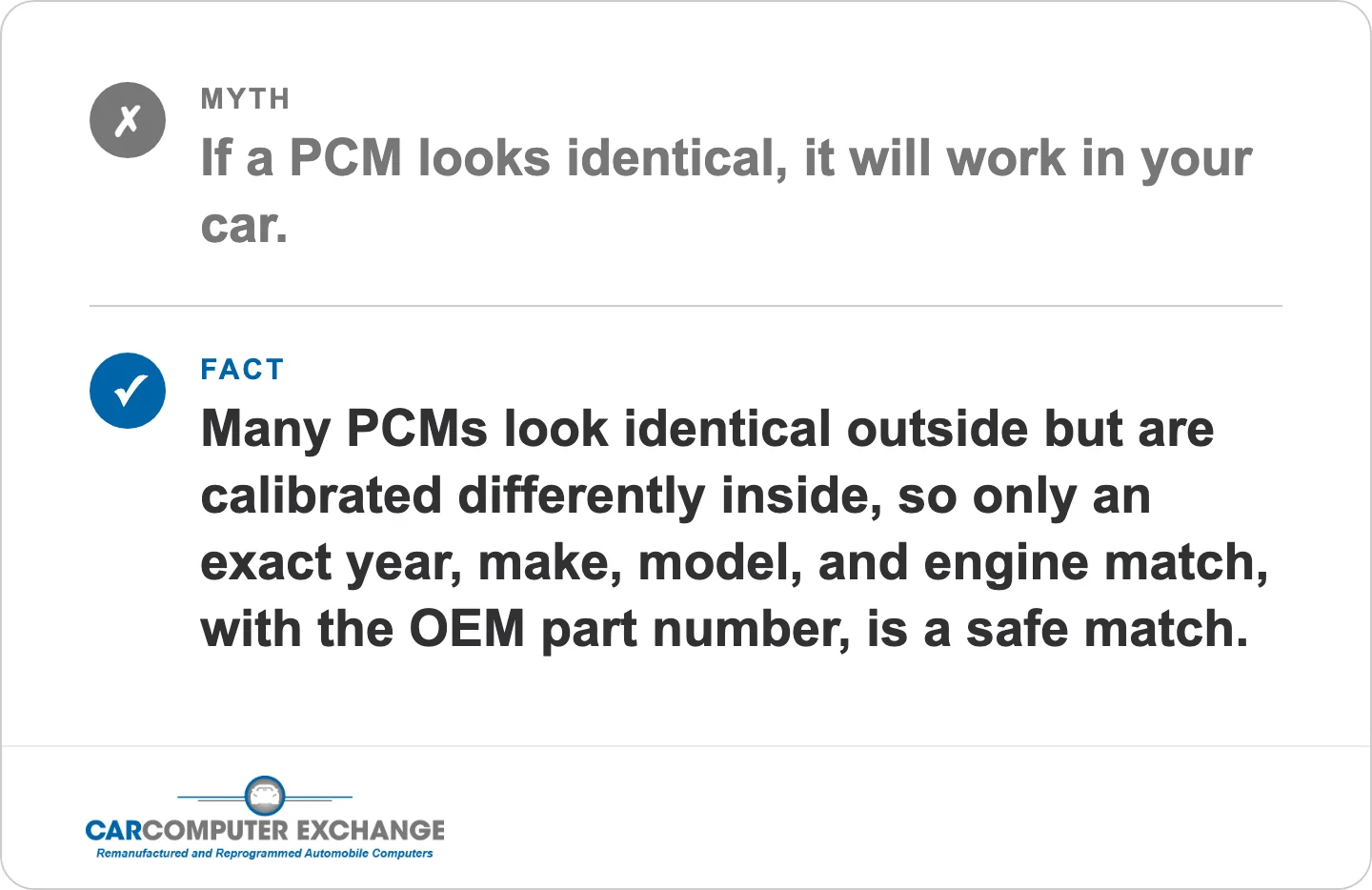
Why a PCM that looks the same is not necessarily the right part. Source: Car Computer Exchange.
If you are buying by part number, look it up in the supplier’s cross-reference to confirm the replacement is built for your exact platform. The closer that match, the more likely the module is truly plug-and-play once it is programmed to your VIN. The simplest route is to let the seller match the module to your vehicle and VIN for you, so the fitment and the programming are handled together.
How Car Computer Exchange Makes a PCM Plug-and-Play for Your Vehicle
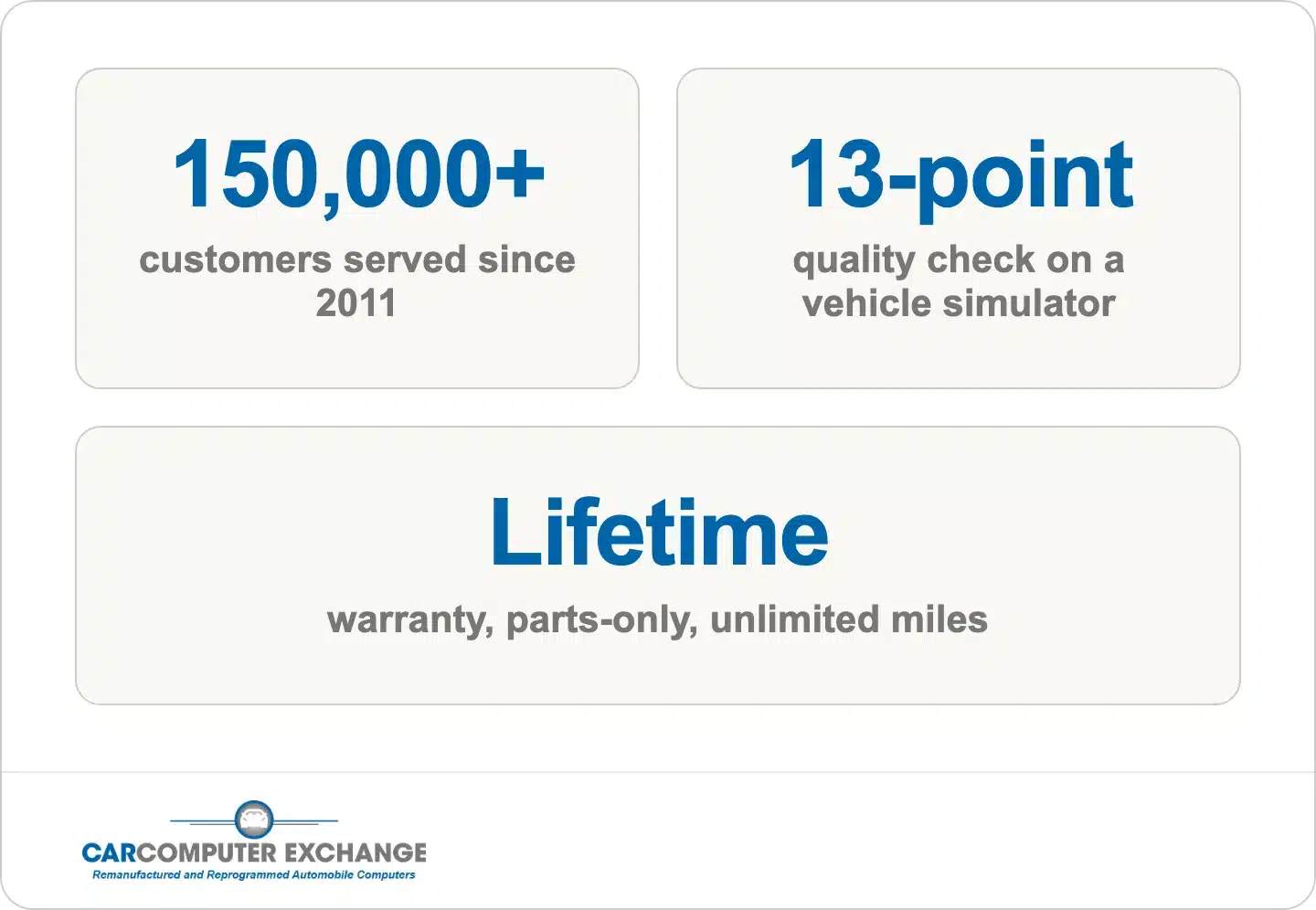
We built Car Computer Exchange to ship replacement PCMs that drop in and run. We program our replacement PCMs to your vehicle’s VIN before they leave us, then run them through a 13-point quality check on a computer-aided vehicle simulator that emulates your engine, transmission, emissions, and anti-theft systems. The calibration and VIN work is finished before the module reaches you, so on a vehicle that needs no security re-sync the install is plug-and-play.
Some vehicles still need a quick anti-theft or key relearn after the swap, which a locksmith or a local shop can handle. A few offers work differently. Mercedes computers are VIN-locked: on the cloned route you mail in your original module and we copy its VIN, keys, and security across, while on the virginized route a shop flashes and codes the unit with factory tools before it starts. High-output computers such as the Hellcat and most 6.4L 392 HEMI units are a send-in repair, rebuilt and reflashed to your VIN. The product listing for your vehicle shows which applies.
We have served more than 150,000 customers since 2011. Our replacement computers carry a lifetime warranty for the original purchaser, parts-only and unlimited-mileage, activated once we receive your core (your old module); the linked warranty page lists the full conditions. They also come with a 60-day money-back guarantee: a refund or exchange if the module does not solve your vehicle’s issue, with processing and programming fees on returns.
Car Computer Exchange programs each PCM to your VIN and bench-tests it before it ships. Source: Car Computer Exchange.
A dealer swap means paying for the part, the labor, and the programming on top. A module shipped pre-programmed to your VIN takes the factory programming off your bill, and any security relearn your vehicle needs is a separate step. You can read what buyers say in our customer reviews, and to find your module, enter your year, make, and model on our homepage.
Frequently Asked Questions
Does a PCM need to be programmed?
Yes, in almost all cases. A PCM has to carry your vehicle’s VIN, the correct factory software, and matching anti-theft data before the engine will run right. The difference with a plug-and-play module is that a reputable remanufacturer does that programming before it ships, so you do not have to.
Can I replace a PCM without programming it?
Only on older vehicles that never used factory VIN programming or an immobilizer. On a modern vehicle with factory anti-theft, an unprogrammed PCM will not start the engine or will trip the security system. A module that already carries your VIN and security data avoids that.
Can I use a junkyard or used PCM?
You can, but it is the hard path. A used PCM carries the donor vehicle’s VIN and security data, so it usually must be reprogrammed to your car before it works. A module programmed to your VIN from the start skips that problem.
Can I program a PCM myself?
Sometimes. Some anti-theft relearns are a short on-car key-cycle procedure you can do in your driveway, and some need a scan tool. Full reflashing takes factory-level software. The simplest route for most drivers is a module that ships already programmed to the vehicle.
Do I need a dealer to program a replacement PCM?
Usually not. When the module is pre-programmed to your VIN, a vehicle with no active immobilizer starts and runs with no dealer visit. If your car needs an anti-theft or key relearn, a locksmith or a local shop can handle it, and some models relearn with a short on-car procedure.
The Bottom Line
Plug-and-play PCMs do work. When the module is programmed to your VIN, it drops in and runs the engine. The main caveat is anti-theft: many newer vehicles need a quick security or key relearn after the swap, which a locksmith or local shop can handle. Of the replacement options, a used or salvage module is the one that reliably adds work, because it still carries another car’s programming.
That is the whole point of Car Computer Exchange. We program our replacement PCMs to your exact vehicle and bench-test them on a vehicle simulator before they ship, so the hard programming is handled before the module reaches your driveway. To see the right computer for your car, enter your year, make, and model, and we will match the right module to your vehicle.
Sources