Remanufactured ECM: A Complete Buyer’s Guide (2026)
A remanufactured ECM is a rebuilt engine control module that has been inspected, cleaned, repaired, and reprogrammed, then restored to its original factory performance. Most cost a few hundred dollars for a common gas vehicle, far less than a new module from the dealer, and when it is pre-programmed to your VIN it installs plug-and-play. We built Car Computer Exchange to supply VIN-programmed, remanufactured engine computers for domestic and diesel vehicles, and we have served more than 150,000 customers.
Key Takeaways
- A remanufactured ECM is restored to its original OEM performance, not just cleaned up. Every component is inspected and tested, and worn or failed parts are replaced before the module is reprogrammed.
- “Remanufactured,” “rebuilt,” “refurbished,” and “used” are not the same thing. Only remanufacturing returns a part to its original performance. “Refurbished” usually means cleaned and tested, held to no such standard.
- A remanufactured ECM usually costs a few hundred dollars for a common gas vehicle, a fraction of a new dealer module plus programming and labor.
- Programming matters more than price. A module pre-programmed to your VIN drops in and runs. A blank or generic unit needs a separate flash or security relearn after install.
- Most remanufactured ECMs carry a core charge, a refundable deposit you get back when you return your old module.
What Is a Remanufactured ECM?
A remanufactured ECM is an engine control module that a specialist has fully reconditioned and reprogrammed so it performs like a factory unit. The module is taken apart, every component is inspected and bench-tested, failed or worn parts are replaced, the old data is erased, and the latest manufacturer software is loaded and matched to a specific vehicle. The process returns the part to its original OEM performance (Motor).
The ECM is the computer that runs your engine. It controls fuel injection, ignition timing, idle, emissions, and the engine’s response under load. On many vehicles the same computer also controls the transmission, and the manufacturer calls it a PCM (powertrain control module). “ECM” and “ECU” (engine control unit) usually refer to the same engine computer, and a PCM is an engine computer that also handles the transmission. The buying advice in this guide applies to all three.
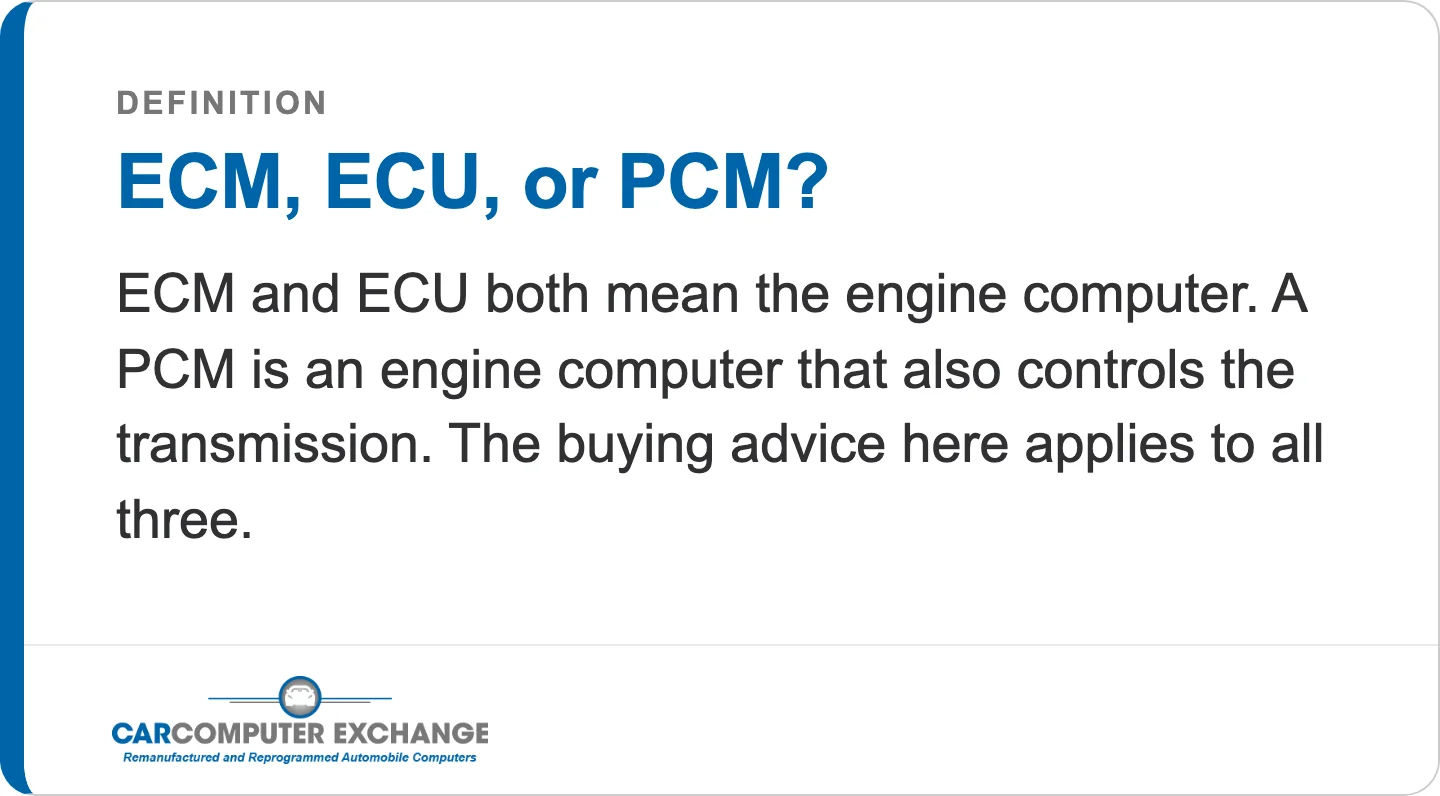
ECM, ECU, and PCM, clarified: the buying advice here applies to all three. Source: Car Computer Exchange.
Remanufactured vs. Rebuilt vs. Refurbished vs. Used
These four words get used as if they mean the same thing, and they do not. The difference decides how close the part is to a new unit, so it is worth knowing before you spend money.
| Term | What it actually means | How close to new |
|---|---|---|
| Remanufactured | Fully disassembled, every component inspected and tested, worn or failed parts replaced, reprogrammed, and returned to its original OEM specification. | Closest to new |
| Rebuilt | Taken apart to the point of the known failure and that fault repaired. Less complete than full remanufacturing, and the two terms are often blurred. | Varies |
| Refurbished | Usually cleaned, tested, and resold. Not held to the remanufacturing standard, so it may or may not match the original spec. | Unpredictable |
| Used / salvage | Pulled from another vehicle and resold as-is, with no restoration and the previous vehicle’s data and wear still on it. | Not restored |
Remanufacturing is the most rigorous of the four. The process returns a part to its original OEM performance, which is what separates it from a reconditioned or rebuilt unit that carries no performance comparison to the original (Motor). “Refurbished” is the word to watch: it usually describes a part that was cleaned and kept in service, not one rebuilt and recovered to a set standard the way a remanufactured part is (TWI).
There is also a fifth path: repair. With a send-in repair you keep your own module. You ship it to a specialist, they fix the specific fault and reprogram it, and they send your original unit back. Specialists handle some vehicles this way, such as certain high-output and Mercedes modules. A remanufactured replacement, by contrast, ships to you first.
How an ECM Is Remanufactured
Remanufacturing an engine computer is a set process, not a quick wipe and resell. Here is how a specialist restores a module and matches it to your vehicle.
- Inspection and testing. The module is opened and examined for corrosion, cracked solder joints, burnt components, and water damage, then its circuits are bench-tested to confirm the hardware still works.
- Cleaning and component replacement. The board is cleaned, and any worn or failed components found in testing are replaced so the unit meets the original specification.
- Erasing the old data. The previous vehicle’s software and stored data are wiped completely, the same way you would wipe a used computer before setting it up fresh.
- Loading the latest software and programming to your VIN. The current manufacturer software is loaded and matched to your make, model, year, and VIN, so the module arrives tailored to your specific vehicle.
- Testing on a vehicle simulator. The programmed module is run on a computer-aided vehicle simulator that emulates the engine, transmission, emissions, and anti-theft systems under load, so any fault shows up before it ships.
- Core return. After your remanufactured module ships and you install it, you send your old module back as the core. That returned unit is assessed for whether it can be reconditioned in turn.
One thing to clear up: a reputable remanufactured ECM is not a random junkyard pull. It is rebuilt from a core and verified before it ships, not a salvage unit pulled from another vehicle and resold as-is. The module is matched to your VIN, and your old unit goes back as the core.
What Does a Remanufactured ECM Cost?
Most common gas-vehicle modules run a few hundred dollars, often in the $250 to $600 range as of November 2026, far less than a new module from the dealer. The exact price depends on the vehicle, the part number, and whether programming is included, so diesel and specialty modules sit higher.

Typical remanufactured ECM price for a common gas vehicle, far below a new dealer module (Nov 2026). Source: Car Computer Exchange.
A remanufactured module is the budget-friendly path compared with the dealer. A new module from a dealership costs significantly more once you add the OEM part, the programming, and the shop labor to install and set it up. The remanufactured unit delivers the same VIN-matched result for less. For a fuller breakdown, see our guide to the average cost of an engine control module.
Programming: Plug-and-Play vs. Flash and Relearn
Programming is the step that decides whether a replacement module simply works or needs extra shop time. Every replacement ECM needs your vehicle’s VIN, calibration, anti-theft data, and emissions settings loaded before the engine will recognize it. See our full guide to replacing a car ECM for the details.
There are two ways that happens:
- Plug-and-play (pre-programmed to your VIN). The seller loads your VIN and the correct calibration before shipping. The module drops in and runs with no extra programming. A reputable remanufacturer does this for you, so the unit arrives ready to install.
- Flash and relearn after install. A blank or generic module arrives without your vehicle’s data and has to be flashed with a scan tool after it is installed. On vehicles with a factory immobilizer, you may also need a security or key relearn so the anti-theft system accepts the new module. That step is sometimes a short on-car procedure and sometimes a job for a local shop.
Confirm which one you are getting before you buy. A pre-programmed module saves you a second trip and a programming bill.
What Is a Core Charge?
A core charge is a deposit added to the price of a part, held for the return of your old unit (California Bureau of Automotive Repair). You get the deposit back when you send that old unit, called the core, back to the seller. The core is your original, failed module. Returning it lets the supplier recondition it, which is why remanufactured parts cost less than new.
On a remanufactured ECM, the core charge works like a deposit on your old computer. You install the new module, then ship the old one back within the window the seller sets. Return it in time and the deposit comes back to you. Returning the core is often what activates the warranty on a remanufactured module too. For the full walkthrough, see our guide to what a core charge is on a car computer.
How to Make Sure It Fits Your Vehicle
The right remanufactured ECM is matched to your exact vehicle, not just the make and model. The wrong part number will not run your engine correctly even if it physically plugs in. Match these before you order:
- The OEM part number printed on your current module, when you can read it.
- Year, make, model, and engine size. A 3.6L and a 5.7L of the same model often use different modules.
- Your VIN, which the remanufacturer uses to load the correct software and calibration.
The simplest way to get a verified match is to enter your year, make, and model in the vehicle picker and find the module built for it, or match the part number directly. If you are not sure which module your vehicle uses, a seller’s support team can confirm it before you order.
Is a Remanufactured ECM Worth It?
For most drivers, a remanufactured ECM is worth it. It fixes the same problem as a new module for much less money, and from a reputable remanufacturer it arrives tested and backed by a warranty. The honest answer, though, depends on who you buy from.
The real concern buyers have is quality: is a remanufactured unit as reliable as new, or am I buying someone’s problem? It is a fair question, and the answer comes down to the process behind the part. A module that was properly inspected, repaired, reprogrammed, and bench-tested behaves like a factory unit. One that was cleaned up and resold without real testing is a gamble. This is exactly why the testing and the warranty matter more than the lowest price.
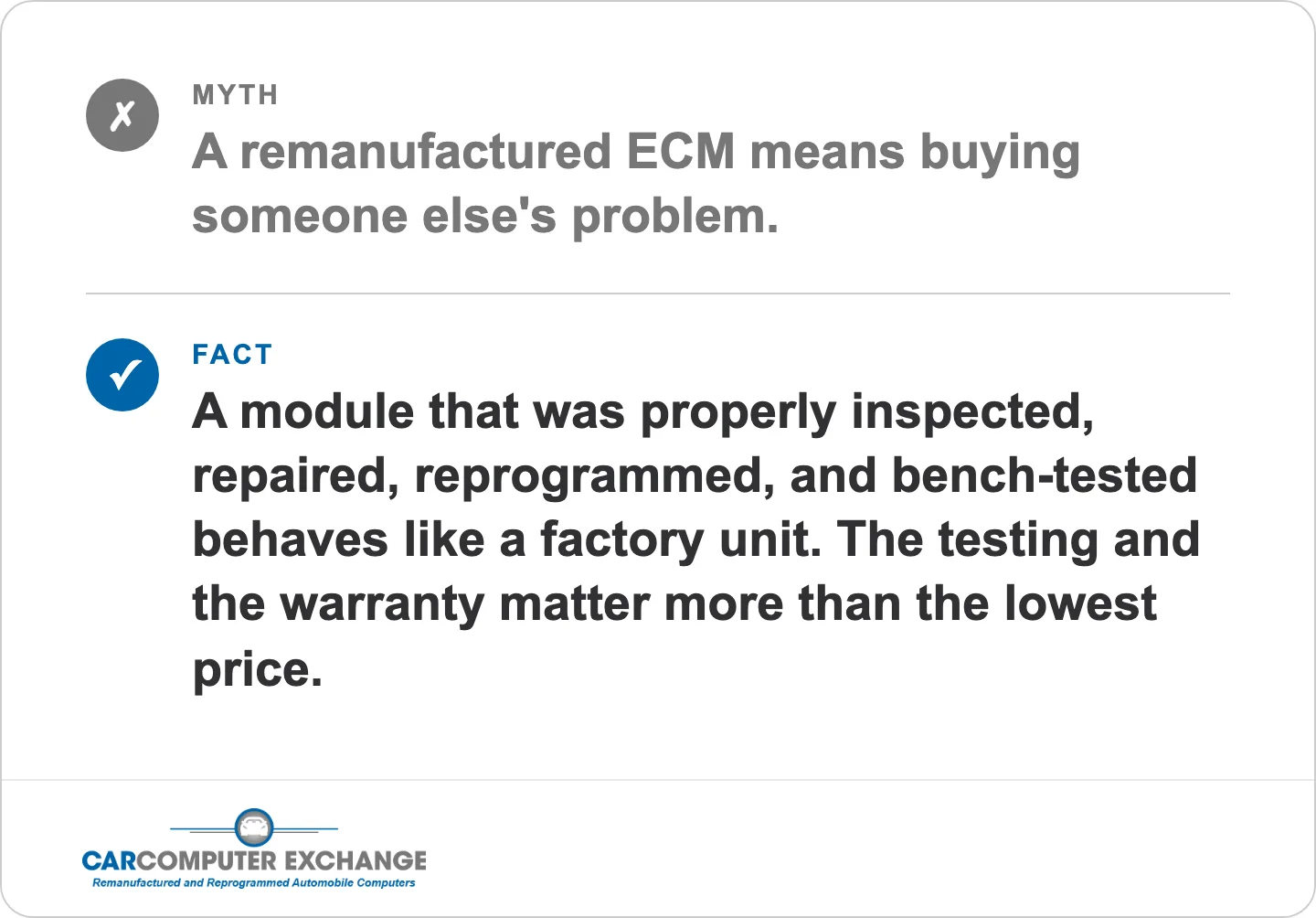
The quality of a remanufactured ECM comes down to the process behind it, not the price. Source: Car Computer Exchange.
The advantages of a remanufactured ECM are concrete:
- Cost. A fraction of the dealer price for the same VIN-matched result.
- Reliability, when it is tested. A documented testing process and a warranty are what separate a dependable module from a risky one.
- Availability of older and obsolete units. Remanufacturing keeps modules available for vehicles the manufacturer no longer supplies.
- Less waste. Reconditioning an existing module keeps a working part in service instead of scrapping it.
We are not going to tell you every remanufactured module from every seller is perfect. They are not. What we can tell you is what to look for: a real testing process, VIN-matched programming, and a warranty that stands behind the part.
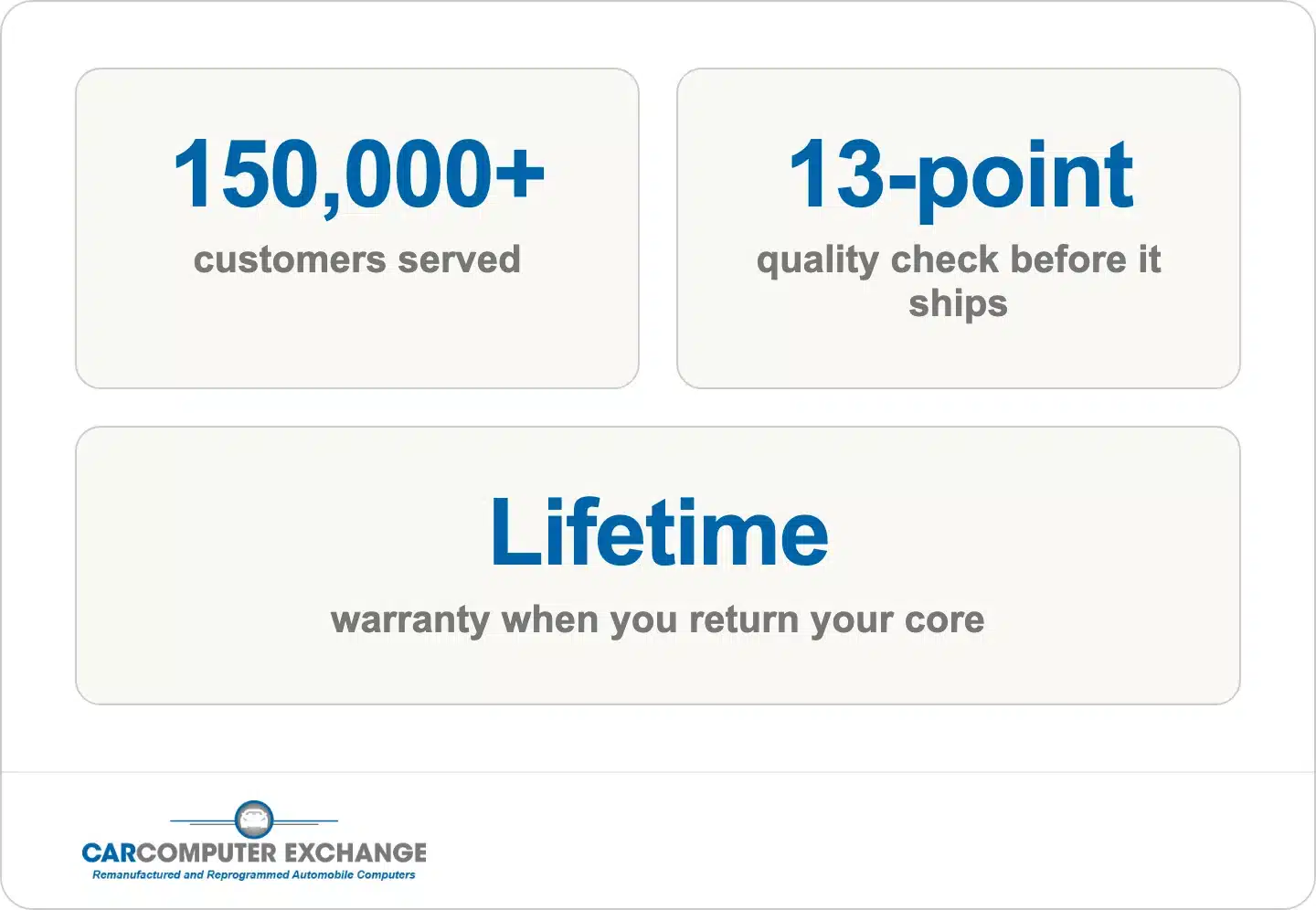
Every Car Computer Exchange ECM is VIN-matched and bench-tested before it ships. Source: Car Computer Exchange.
Frequently Asked Questions
How much does a remanufactured ECM cost?
A remanufactured ECM usually costs a few hundred dollars for a common gas vehicle, far less than a new module from the dealer. The price depends on the vehicle, the part number, and whether programming is included, so diesel and specialty modules cost more. Enter your year, make, and model to see the price for your vehicle.
Is a remanufactured ECM as good as new?
A properly remanufactured ECM is restored to its original factory specification, so it performs like a new module. The difference is the price and the process behind it. The key is buying from a seller that inspects, repairs, reprograms, and tests the unit, rather than one that simply cleans and resells it.
Can you replace an ECM without programming?
Usually not. A replacement ECM needs your VIN, calibration, anti-theft data, and emissions settings before the engine will recognize it. Some modules ship pre-programmed to your VIN so no extra step is needed. Others arrive blank and have to be flashed with a scan tool after installation.
Do I need a dealer to program a remanufactured ECM?
Not if the module ships pre-programmed to your VIN. A unit programmed to your vehicle before it ships drops in without a dealer visit. If you buy a blank or generic module, it will need flashing after install, and a vehicle with a factory immobilizer may also need a security relearn, which a local shop can often handle without a dealer visit.
How long does a remanufactured ECM last?
There is no fixed lifespan for a remanufactured ECM. A unit from a seller that properly tests its modules can run for years, which is why reputable sellers back them with long or lifetime warranties. Lifespan claims vary by seller and are not a substitute for a written warranty, so check the coverage before you buy.
Can I install a remanufactured ECM myself?
Often yes, if the module is pre-programmed to your VIN. The ECM is usually accessible, and a pre-programmed unit is designed to drop in and run. The one caveat is anti-theft: a vehicle with a factory immobilizer may need a key or security relearn after the swap.
How can I tell if my ECM is actually the problem?
Common signs of a failing ECM include a no-start, a check engine light that will not clear, stalling, misfires, and poor fuel economy, but those symptoms overlap with other faults. Confirm it with a scan before you replace anything. See our guide to ECM testing and problems for how to check.
The Bottom Line
A remanufactured ECM is the sensible middle path between an expensive new dealer module and a risky used one. It restores your engine computer to factory performance for a fraction of the dealer cost, and when it is programmed to your VIN it installs without a trip to the shop. The part of the decision that matters most is not the price, it is the process behind the module and the warranty that backs it.
Every remanufactured ECM Car Computer Exchange builds is matched to your VIN and run through a 13-point quality check on a computer-aided vehicle simulator before it leaves our Raleigh facility, and it is covered by a free lifetime warranty when you return your core. To find the right remanufactured module for your car or truck, enter your year, make, and model and we will match it to your exact vehicle.
Sources